Ingredients
Equipment
Method
Step-by-Step Instructions:
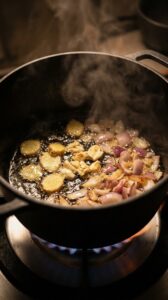
- Sauté the Base Aromatics:Heat the cooking oil in your stockpot over medium heat. Sauté the sliced ginger, minced garlic, and chopped onions for 2 to 3 minutes until fragrant, translucent, and slightly golden.
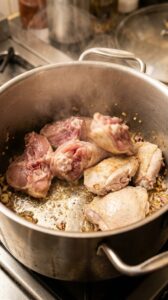
- Sear the Chicken:Add the chicken pieces to the pot. Sear and stir frequently for 5 to 7 minutes until the chicken turns light opaque white and releases some of its natural fats.
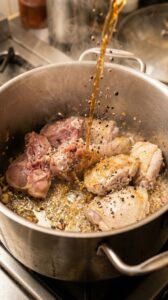
- Season with Fish Sauce:Drizzle the fish sauce (patis) directly over the searing meat along with the black pepper. Toss continuously for 1 to 2 minutes so the savory flavor penetrates into the chicken skin and bones.
- Add Coconut Water and Lemongrass:Pour in the fresh young coconut water (and optional plain water, if preferred). Drop in the bruised lemongrass bundles. Bring the liquid to a rolling boil over high heat.
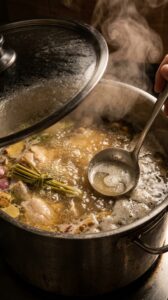
- Simmer until Tender:Once boiling, skim off any foam or impurities rising to the surface with a slotted spoon or ladle. Lower the heat to medium-low, cover with a tight lid, and simmer gently for 25 to 30 minutes (or 45 to 50 minutes if using free-range native chicken) until the meat is fork-tender.
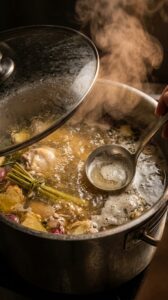
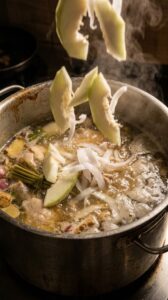
- Add Papaya and Coconut Ribbons:Add the green papaya wedges and scraped coconut meat ribbons. Cover and simmer for another 6 to 8 minutes until the papaya turns fork-tender yet holds its shape.
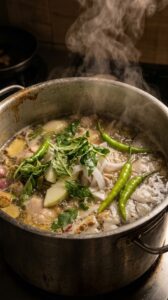
- Finish with Greens and Chilies:Toss in the green long chilies (siling haba) and freshly picked chili leaves (or malunggay). Turn off the heat, cover the pot, and let the residual steam wilt the greens for 2 minutes.
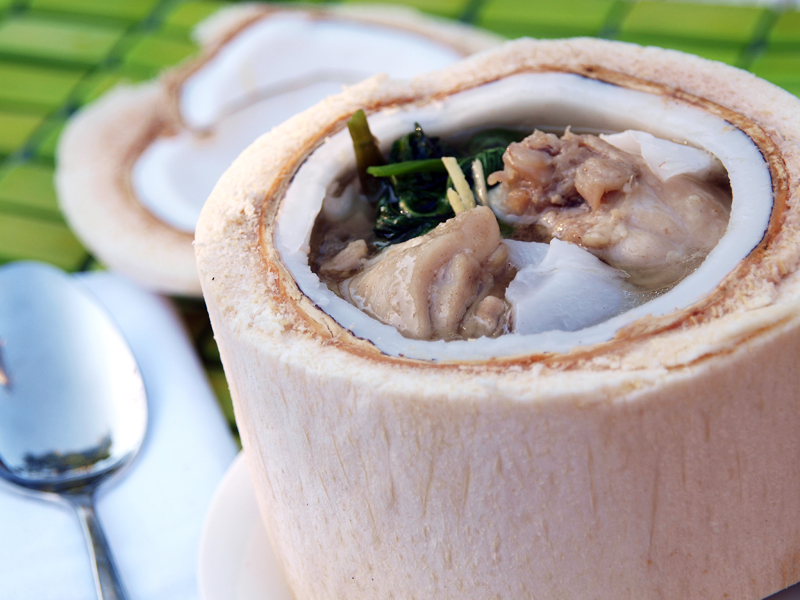
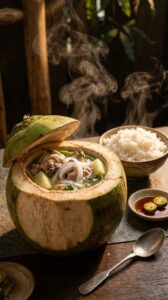
- Serve:Ladle generously into deep soup bowls—or inside hollowed-out fresh coconut husks for traditional flair. Serve immediately with warm steamed jasmine rice and a side of calamansi with fish sauce.
Notes
🌿 Health & Nutritional Benefits of Chicken Binakol
- Electrolyte-Rich Hydration (Coconut Water): Fresh coconut water acts as a natural isotonic base loaded with potassium, magnesium, and natural electrolytes, making this soup deeply revitalizing.
- Joint & Gut Support (Bone-In Chicken Broth): Simmering bone-in chicken yields bioavailable collagen, amino acids, and gelatin that aid digestive gut health and soothe inflamed joints.
- Anti-Inflammatory & Digestive Aid (Ginger & Lemongrass): Gingerol from fresh ginger and citral from bruised lemongrass promote healthy digestion, ease gastric distress, and strengthen the immune system.
- Micronutrient Boost (Papaya & Moringa/Chili Leaves): Green papaya provides natural papain enzymes that aid protein digestion, while chili/malunggay leaves pack iron, Vitamin A, and Vitamin C.
Key Ingredients & Cooking Tips
- Use Pure Young Coconut Water: Avoid pasteurized or canned coconut juice that contains added cane sugar or syrup. Fresh green coconuts (buko) deliver clean, natural sweetness without tasting cloying.
- Bruise the Lemongrass Well: Hit the root ends firmly with the back of a chef's knife before knotting. This breaks the cellular structure and releases essential aromatic oils into the broth.
- Native Chicken vs. Broiler Chicken: Authentic Binakol traditionally uses native chicken (manok na bisaya), prized for its deep, savory flavor. Because native chicken is leaner and firmer, extend simmering time until fully tender.
- Balance Sweetness with Fish Sauce: Because coconut water can vary in sweetness depending on the age of the fruit, adjust the savory finish by tasting the broth right before adding the papaya and adding splashes of quality fish sauce as needed.
📊 Complete Nutritional Profile
Per individual serving (based on 6 servings total):- Calories: 310 kcal
- Total Fat: 13 g
- Saturated Fat: 4.5 g
- Sodium: 580 mg
- Total Carbohydrates: 14 g
- Dietary Fiber: 3 g
- Sugars: 7 g
- Protein: 34 g
- Potassium: 620 mg
- Iron: 2.4 mg