Ingredients
Equipment
Method
Step-by-Step Instructions:
- In a large stockpot or Dutch oven, combine the oxtail pieces and water. Bring to a boil over high heat, skimming off any foam or scum that rises to the top.
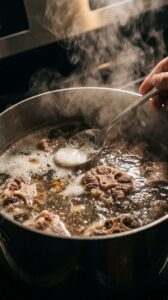
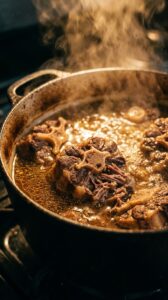
- Lower the heat to medium-low, cover, and simmer for 2 hours to 2 hours 30 minutes (or pressure-cook for 45 minutes) until the meat is fork-tender and falling off the bone. Reserve 4 cups of the rich beef broth.
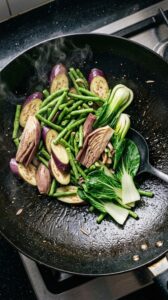
- In a separate pan, heat 1 tablespoon of oil. Quickly blanch the eggplant, yardlong beans, banana blossom, and bok choy in boiling water or sauté them for 3 to 4 minutes until tender-crisp. Remove and set aside (cooking vegetables separately prevents them from turning mushy).
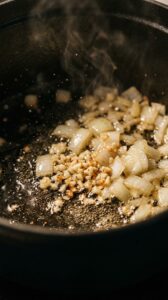
- Heat the remaining oil in a large deep pot over medium heat. Sauté the minced garlic and diced onions for 2 minutes until fragrant and translucent.
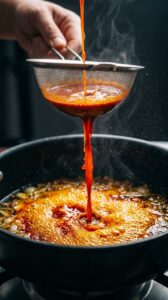
- Strain the soaked annatto water into the pot (or add annatto powder) to give the oil a vibrant golden-orange hue.
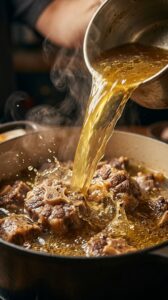
- Pour in the 4 cups of reserved beef broth and add the tender cooked oxtail. Bring to a light boil.
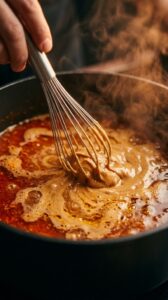
- Whisk in the peanut butter until completely dissolved and integrated into the broth.
- Gradually stir in the toasted ground rice slurry to thicken the gravy. Simmer over medium-low heat for 5 to 8 minutes, stirring continuously, until the sauce thickens into a smooth, velvety consistency.

- Season the peanut sauce with a pinch of salt and black pepper to taste.
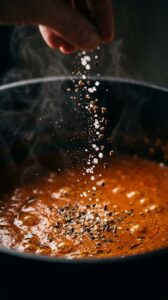
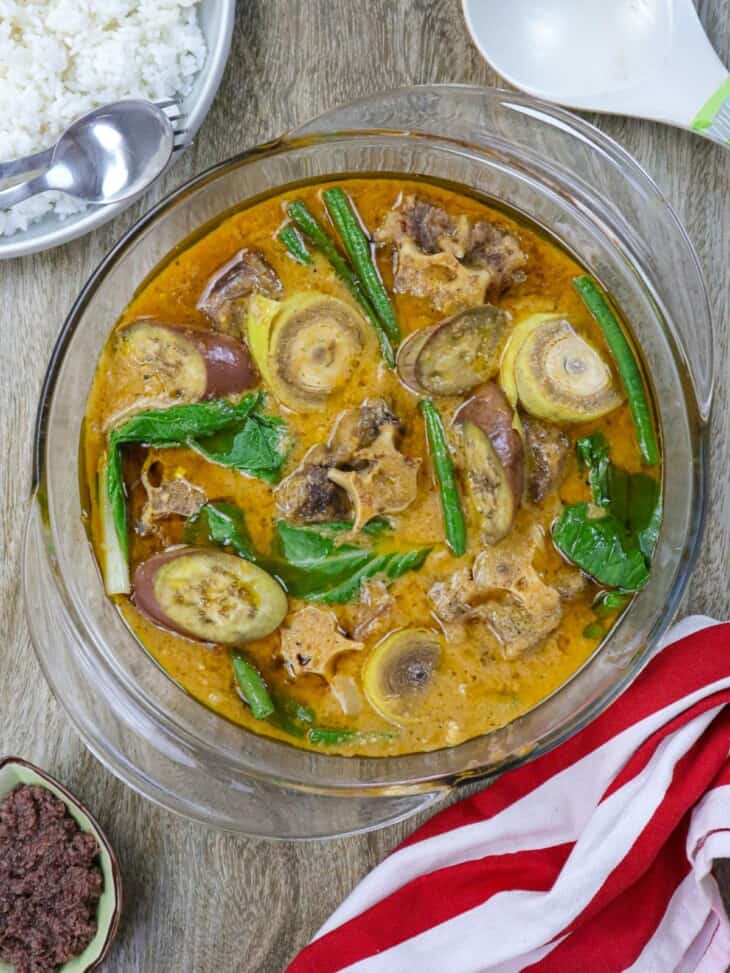
- Arrange the tender oxtail and cooked vegetables on a wide serving platter, pouring the rich peanut gravy over top (or arrange the greens neatly alongside the meat).
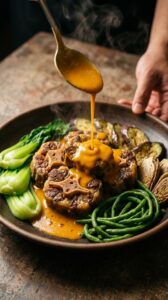
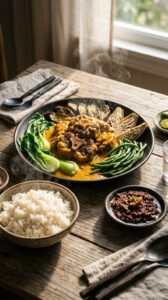
- Serve piping hot alongside warm white rice and a small dish of sautéed bagoong alamang!
Notes
🌿 Health & Nutritional Benefits of Kare-Kare
While celebrated as a luxurious festive dish, Kare-Kare supplies a rich combination of protein, healthy fats, collagen, and essential minerals:- High Natural Collagen for Joint Health: Slow-cooked oxtail and bone marrow release abundant natural collagen and gelatin into the broth, supporting joint cartilage repair, skin elasticity, and gut health.
- Heart-Healthy Monounsaturated Fats (Peanuts): Ground peanuts deliver plant-based protein alongside monounsaturated fatty acids, Vitamin E, and niacin to support cardiovascular health and cellular energy.
- Rich Spectrum of Vitamins & Fiber: Combining fiber-dense vegetables like banana blossom, yardlong beans, eggplant, and bok choy supplies high levels of Vitamin A, Vitamin C, iron, and potassium for digestive and immune function.
- Natural Beta-Carotene from Annatto: Annatto (atsuete) provides natural plant carotenoids that act as cellular antioxidants protecting against oxidative stress.
Key Ingredients & Cooking Tips
- Tenderize the Oxtail Completely: Oxtail requires slow cooking to soften its tough connective tissues into tender, melt-in-your-mouth gelatin. A pressure cooker cuts cooking time down to under an hour without sacrificing tenderness.
- Toasted Ground Rice Thickener: Traditional toasted ground rice (galapong) gives the gravy a subtle nutty taste and smooth body. Toast uncooked white rice in a dry skillet over medium heat until golden, then grind into a fine powder using a spice grinder or blender.
- Cook Vegetables Separately: Adding vegetables directly into the heavy peanut sauce can cause them to overcook or get lost in the thick gravy. Blanching or light sautéing separately preserves their bright colors and crisp textures.
- Bagoong is Essential: The peanut sauce itself is intended to be mild and earthy—the dish relies on salty, pungent bagoong alamang to create the iconic flavor contrast.
📊 Complete Nutritional Profile
Here is the breakdown per serving of Kare-Kare:- Calories: 520 kcal
- Total Fat: 36 g
- Saturated Fat: 11 g
- Sodium: 580 mg (without extra bagoong)
- Total Carbohydrates: 18 g
- Dietary Fiber: 5 g
- Sugars: 4 g
- Protein: 34 g
- Potassium: 560 mg
- Iron: 3.5 mg