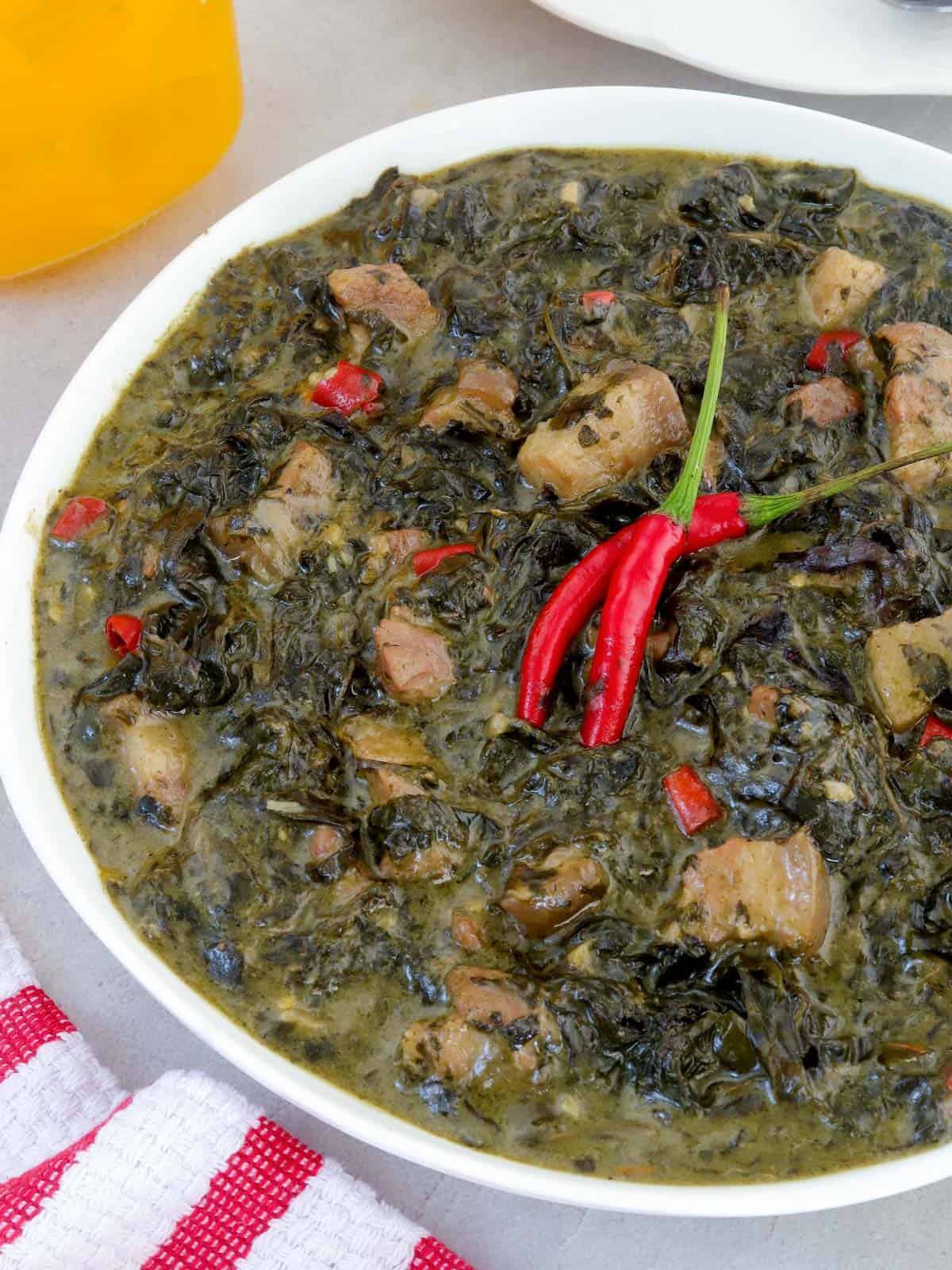
Ingredients
Equipment
Method
Step-by-Step Instructions:
- Heat cooking oil in a large deep pan or Dutch oven over medium heat. Sauté the pork belly strips for 5 to 6 minutes until rendered and lightly browned.
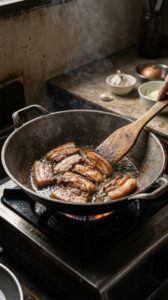
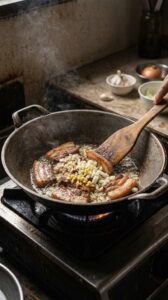
- Add the minced garlic, diced onions, and minced ginger to the pan fat. Sauté for 2 to 3 minutes until soft and fragrant.
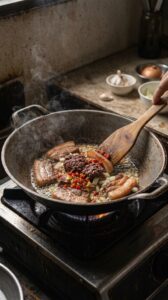
- Stir in the fermented shrimp paste (bagoong alamang) and chopped red bird's eye chilies (siling labuyo). Sauté for 1 to 2 minutes to cook off the raw taste of the shrimp paste.
- Pour in the 4 cups of thin coconut milk (gata) and black pepper. Bring to a light simmer over medium heat.
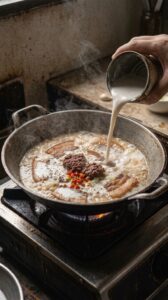
- Place the dried taro leaves on top of the simmering liquid. Press them down gently using the back of a spoon so they absorb the liquid. Crucial rule: Do not stir or mix the leaves vigorously at this stage, as stirring raw taro leaves causes an itchy sensation in the throat (kati).
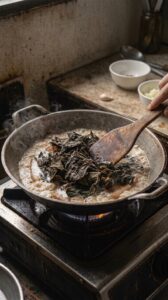
- Lower the heat to low, cover the pan, and simmer undisturbed for 20 to 25 minutes until the taro leaves wilt down completely and absorb most of the coconut milk.

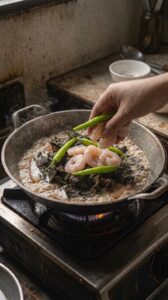
- Add the peeled shrimp (if using) and whole long green chilies (siling haba).
- Pour the 2 cups of thick coconut cream (kakang gata) evenly over the top. Simmer uncovered on low heat for another 15 to 20 minutes, gently pushing the leaves down occasionally, until the coconut oil begins to render and separate at the edges.
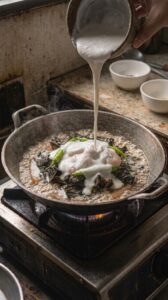
- Once the sauce turns thick, dark, and glossy, taste and adjust seasoning with a pinch of salt or extra bagoong if needed.
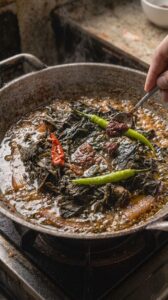
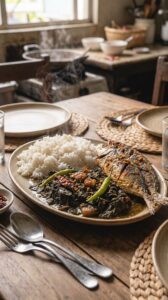
- Transfer to a platter and serve piping hot alongside warm white rice and fried fish!
Notes
🌿 Health & Nutritional Benefits of Laing
Laing offers an impressive spectrum of plant fiber, essential minerals, and healthy fats:- High Dietary Fiber & Digestive Health: Dried taro leaves are packed with dietary fiber, which aids digestive motility, feeds beneficial gut bacteria, and promotes long-lasting satiety.
- Rich in Essential Vitamins (A & C): Taro leaves provide exceptional levels of Vitamin A for eye health and Vitamin C to bolster immune function and cellular protection.
- Medium-Chain Triglycerides (MCTs from Coconut Milk): Coconut milk delivers Lauric Acid and healthy MCT fats that provide quick cellular energy and support healthy metabolic function.
- Metabolic Boost from Capsaicin: Red siling labuyo contains capsaicin, which stimulates circulation, enhances metabolic rate, and releases natural endorphins.
Key Ingredients & Cooking Tips
- Never Stir Early (Prevents Itchiness): Raw taro leaves contain calcium oxalate crystals that cause an itchy tongue and throat (pangangati) if stirred prematurely before being fully cooked in acid or fat. Always let the leaves submerge naturally and cook through on low heat!
- Use Sun-Dried Taro Leaves: Dried taro leaves absorb coconut cream much better than fresh leaves and have a significantly lower risk of causing throat irritation.
- The Two-Step Coconut Process: Cooking first in thin coconut milk tenderizes the leaves, while finishing with thick coconut cream (kakang gata) gives the dish its signature rich, oil-rendered glaze.
- Simmering Until Oil Renders: Authentic Bicolano Laing is cooked until the coconut cream renders its natural oil (nagmamantika), resulting in a thick, rich texture rather than a watery soup.
📊 Complete Nutritional Profile
Here is the breakdown per serving of Laing:- Calories: 360 kcal
- Total Fat: 28 g
- Saturated Fat: 18 g
- Sodium: 580 mg
- Total Carbohydrates: 14 g
- Dietary Fiber: 6 g
- Sugars: 3 g
- Protein: 12 g
- Potassium: 520 mg
- Vitamin A: 110% DV