Ingredients
Equipment
Method
Step-by-Step Instructions:
- In a large stockpot, combine water (or rice washing), quartered tomatoes, and quartered onions. Bring to a boil over medium-high heat.
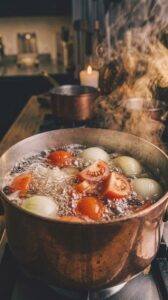
- Add the sliced daikon radish (labanos) and simmer for 3 to 4 minutes until slightly translucent.

- Pour in the tamarind soup base mix and fish sauce (patis). Stir thoroughly to dissolve the mix completely.

- Add the string beans (sitaw), eggplant (talong), okra, and long green chilies (siling haba). Simmer for 3 minutes until the vegetables are tender-crisp.

- Add the fresh whole shrimp to the boiling pot. Crucial step: Cook for only 2 to 3 minutes until the shrimp turn bright orange and curl into a C-shape. Do not overcook.

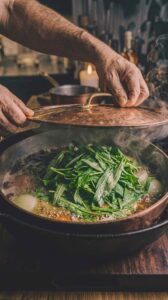
- Turn off the heat immediately. Stir in the kangkong leaves and tender stems, then cover the pot for 2 minutes to let the residual heat gently wilt the greens.
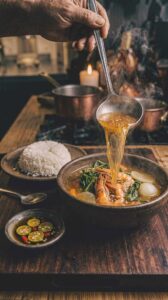
- Ladle into soup bowls and serve steaming hot with warm white rice and a side of fish sauce with calamansi and crushed siling labuyo!
Notes
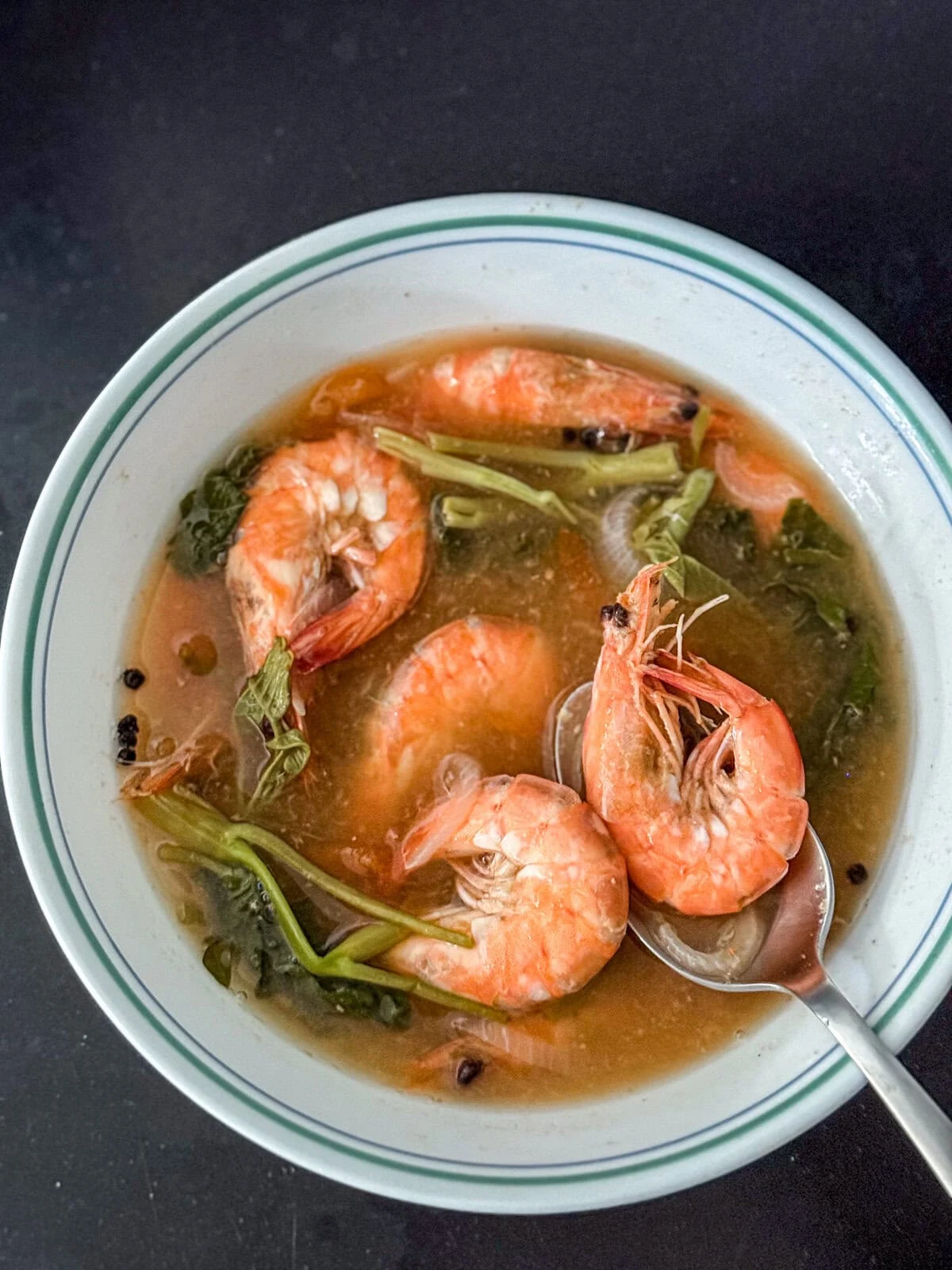
🌿 Health & Nutritional Benefits of Sinigang na Hipon
Sinigang na Hipon is one of the healthiest, lowest-calorie main courses in traditional Pinoy cuisine:- Lean Seafood Protein: Shrimp provides high-quality lean protein that aids muscle synthesis and cellular repair without heavy saturated fats.
- Rich in Essential Antioxidants (Astaxanthin & Selenium): Shrimp contains astaxanthin, a potent carotenoid antioxidant that supports skin elasticity and reduces cellular inflammation, along with selenium for thyroid and immune function.
- Immune & Vitamin C Boost: Sour tamarind broth combined with fresh tomatoes and leafy greens delivers high doses of Vitamin C to bolster immune defenses.
- High Dietary Fiber & Hydration: Packed with fiber-dense veggies like radish, okra, and water spinach, this soup promotes smooth digestion while hydrating the body with an electrolyte-rich broth.
Key Ingredients & Cooking Tips
- Keep Shrimp Heads Intact: Leaving the heads on the shrimp releases rich shrimp fat (taba ng hipon) directly into the broth as it simmers, giving the soup a much deeper seafood flavor and a lovely orange tint.
- Avoid Overcooking Shrimp: Shrimp cooks fast! Adding them at the very end for just 2 to 3 minutes ensures the meat stays juicy and sweet rather than rubbery.
- Layering Vegetables: Harder root veggies like radish go in first, while delicate greens like kangkong go in after turning off the burner so they retain their bright color and nutrients.
- Souring Alternatives: While tamarind (sampalok) mix is standard, natural souring agents like fresh boiled tamarind pods, kamias (bilimbi), green mangoes, or calamansi offer wonderful authentic regional variations.
📊 Complete Nutritional Profile
Here is the breakdown per serving of Sinigang na Hipon:- Calories: 160 kcal
- Total Fat: 2.5 g
- Saturated Fat: 0.5 g
- Sodium: 620 mg
- Total Carbohydrates: 12 g
- Dietary Fiber: 4 g
- Sugars: 3 g
- Protein: 22 g
- Potassium: 420 mg
- Vitamin C: 45% DV
- Vitamin A: 35% DV