Sinigang na Hipon Recipe (Filipino Sour Shrimp Soup)
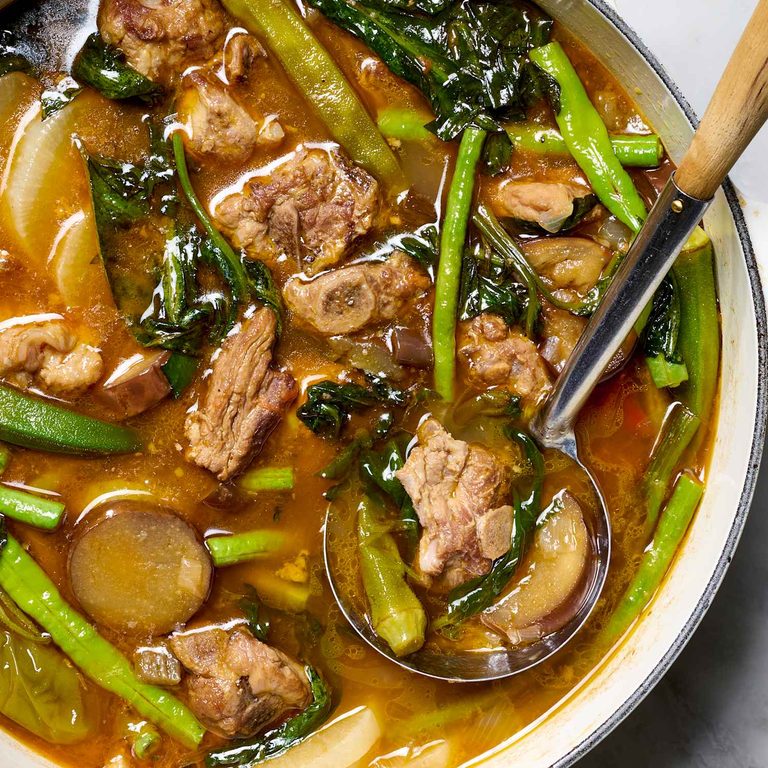
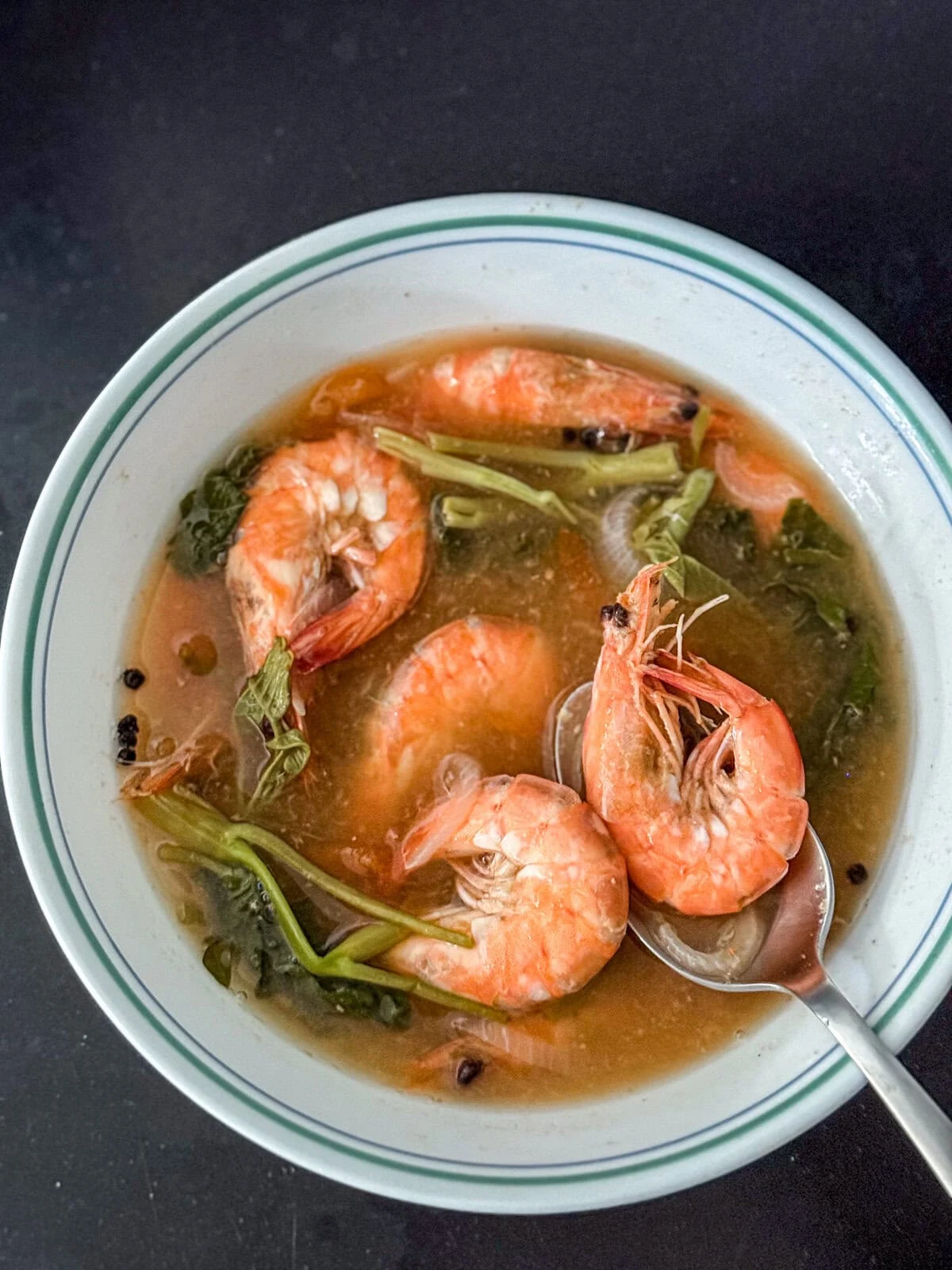
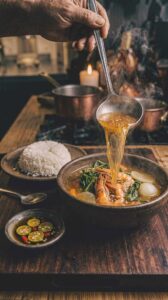
Sinigang na Hipon is a beloved Filipino seafood soup characterized by fresh, whole prawns or large shrimp cooked in a light, tangy tamarind broth loaded with radish, eggplant, long green chilies, and leafy green vegetables. Quick, light, and deeply satisfying, this sour soup is a quintessential Pinoy comfort dish perfect for any day of the week.
What is Sinigang na Hipon?
Sinigang is the umbrella term for traditional Filipino sour broths. While pork (Sinigang na Baboy) is a rich everyday staple, Sinigang na Hipon highlights the delicate, sweet taste of ocean-fresh shrimp. Because shrimp cooks in a matter of minutes, the broth remains clear, light, and vibrant, serving up an invigorating balance of tart tamarind and natural seafood sweetness.Ingredients
Equipment
Method
Step-by-Step Instructions:
- In a large stockpot, combine water (or rice washing), quartered tomatoes, and quartered onions. Bring to a boil over medium-high heat.

- Add the sliced daikon radish (labanos) and simmer for 3 to 4 minutes until slightly translucent.

- Pour in the tamarind soup base mix and fish sauce (patis). Stir thoroughly to dissolve the mix completely.

- Add the string beans (sitaw), eggplant (talong), okra, and long green chilies (siling haba). Simmer for 3 minutes until the vegetables are tender-crisp.

- Add the fresh whole shrimp to the boiling pot. Crucial step: Cook for only 2 to 3 minutes until the shrimp turn bright orange and curl into a C-shape. Do not overcook.

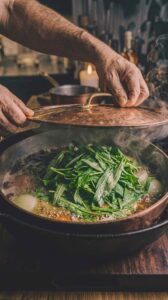
- Turn off the heat immediately. Stir in the kangkong leaves and tender stems, then cover the pot for 2 minutes to let the residual heat gently wilt the greens.
- Ladle into soup bowls and serve steaming hot with warm white rice and a side of fish sauce with calamansi and crushed siling labuyo!
Notes
🌿 Health & Nutritional Benefits of Sinigang na Hipon
Sinigang na Hipon is one of the healthiest, lowest-calorie main courses in traditional Pinoy cuisine:- Lean Seafood Protein: Shrimp provides high-quality lean protein that aids muscle synthesis and cellular repair without heavy saturated fats.
- Rich in Essential Antioxidants (Astaxanthin & Selenium): Shrimp contains astaxanthin, a potent carotenoid antioxidant that supports skin elasticity and reduces cellular inflammation, along with selenium for thyroid and immune function.
- Immune & Vitamin C Boost: Sour tamarind broth combined with fresh tomatoes and leafy greens delivers high doses of Vitamin C to bolster immune defenses.
- High Dietary Fiber & Hydration: Packed with fiber-dense veggies like radish, okra, and water spinach, this soup promotes smooth digestion while hydrating the body with an electrolyte-rich broth.
Key Ingredients & Cooking Tips
- Keep Shrimp Heads Intact: Leaving the heads on the shrimp releases rich shrimp fat (taba ng hipon) directly into the broth as it simmers, giving the soup a much deeper seafood flavor and a lovely orange tint.
- Avoid Overcooking Shrimp: Shrimp cooks fast! Adding them at the very end for just 2 to 3 minutes ensures the meat stays juicy and sweet rather than rubbery.
- Layering Vegetables: Harder root veggies like radish go in first, while delicate greens like kangkong go in after turning off the burner so they retain their bright color and nutrients.
- Souring Alternatives: While tamarind (sampalok) mix is standard, natural souring agents like fresh boiled tamarind pods, kamias (bilimbi), green mangoes, or calamansi offer wonderful authentic regional variations.
📊 Complete Nutritional Profile
Here is the breakdown per serving of Sinigang na Hipon:- Calories: 160 kcal
- Total Fat: 2.5 g
- Saturated Fat: 0.5 g
- Sodium: 620 mg
- Total Carbohydrates: 12 g
- Dietary Fiber: 4 g
- Sugars: 3 g
- Protein: 22 g
- Potassium: 420 mg
- Vitamin C: 45% DV
- Vitamin A: 35% DV