Bicol Express Recipe (Spicy Pork Belly in Rich Coconut Milk & Bagoong)
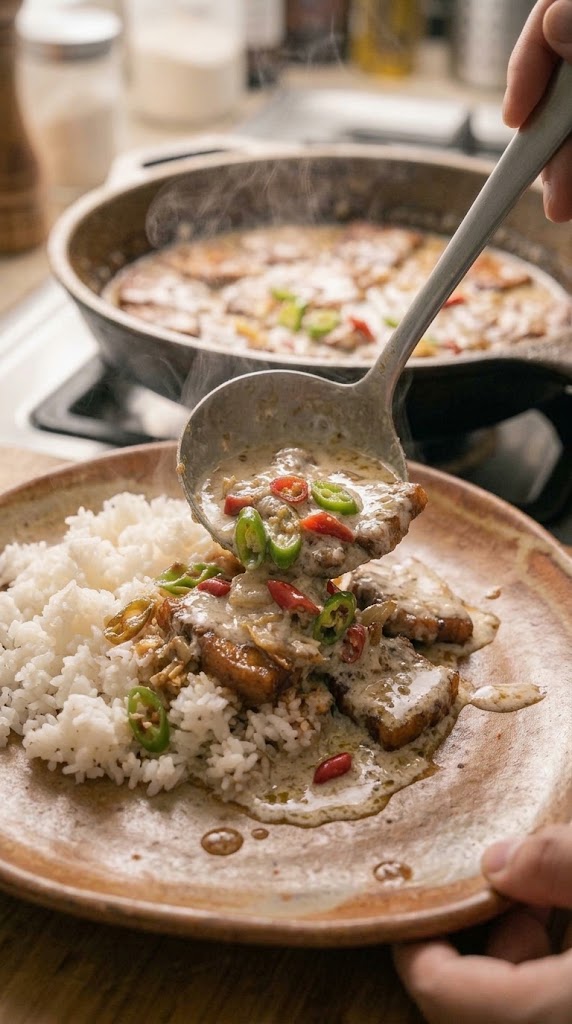
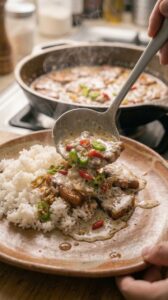
Bicol Express is an iconic Filipino stew made with succulent pork belly gently simmered in creamy coconut milk and rich coconut cream, seasoned with savory shrimp paste (bagoong alamang), and loaded with fiery chili peppers. Originating from the Bicol region—the coconut and chili capital of the Philippines—this dish strikes the ultimate balance of rich, velvety sweetness, savory umami depth, and bold, lingering heat that demands extra servings of hot steamed rice.
What is Bicol Express?
Named after the passenger train service that once ran between Manila and the Bicol region, Bicol Express is a quintessential example of regional Filipino comfort food. While popularized in Manila's Malate district by Celerina Kalaw, the dish draws heavily from Bicolano cooking traditions like Gulay na may Lada (vegetables stewed in coconut milk and heavy chilies). Fatty cuts of pork belly are slowly rendered and browned, sautéed with ginger, garlic, and onions, flavored with fermented shrimp paste, and braised in freshly squeezed coconut milk until the sauce thickens into a glistening, luscious gravy packed with sliced green finger chilies and hot bird's eye chilies.Ingredients
Equipment
Method
Step-by-Step Instructions:
- In a large skillet or wide pan over medium heat, add the sliced pork belly and cook without extra oil for 5 to 7 minutes, stirring occasionally, until the pork renders its own fat and begins to turn lightly golden.
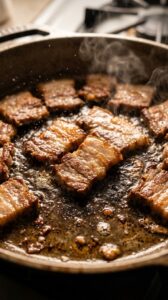
- If excess oil accumulates, spoon out all but 1 tablespoon of fat. Add the ginger, minced garlic, and chopped onions directly to the pan. Sauté for 2 to 3 minutes until fragrant and translucent.
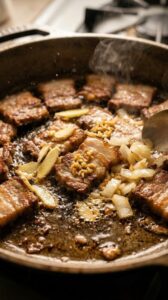
- Add the shrimp paste (bagoong alamang) into the pan, stirring it into the rendered pork and aromatics for 1 to 2 minutes until aromatic and slightly darkened.
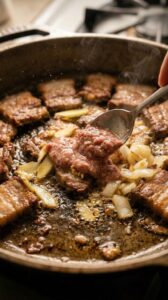
- Pour in the 2 cups of thin coconut milk (gata). Stir well to scrape up any browned bits stuck to the bottom of the pan.
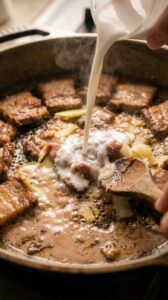
- Bring the mixture to a gentle boil, then reduce the heat to low. Cover the pan and let it simmer for 25 to 30 minutes, or until the pork belly is fork-tender. (Add 1/4 cup of water if the liquid reduces too quickly before the pork softens).
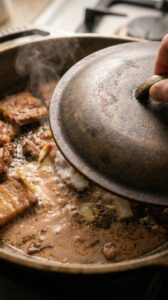
- Uncover the pan and pour in the 1 cup of thick coconut cream (kakang gata). Season with freshly cracked black pepper and brown sugar (if using).
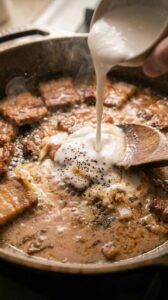
- Stir in the sliced green chilies (siling haba) and red bird’s eye chilies (siling labuyo).
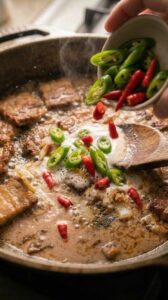
- Continue simmering uncovered over medium-low heat for another 8 to 10 minutes, stirring frequently to prevent scorching, until the coconut cream reduces into a thick, glossy gravy that coats the back of a spoon and renders pure coconut oil around the edges.
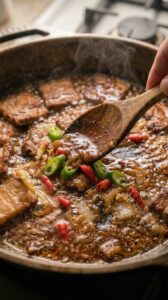
- Taste and adjust seasoning with a little more shrimp paste if needed for saltiness, or add extra sliced chilies for more kick.
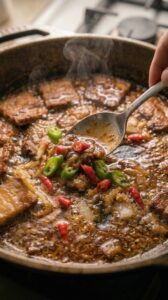
- Remove from heat and transfer to a warm serving platter. Serve immediately alongside heaps of warm, freshly steamed white rice!
Notes
🌿 Health & Nutritional Benefits of Bicol Express
Bicol Express combines dense macro- and micronutrients with natural, metabolism-firing spices:- Natural Medium-Chain Triglycerides (Coconut Milk & Cream): Coconut milk contains medium-chain triglycerides (MCTs), primarily lauric acid, which are metabolized rapidly by the liver into usable energy rather than stored as fat, providing sustained stamina.
- Capsaicin-Powered Metabolic Boost (Chilies): Siling haba and siling labuyo are loaded with capsaicin, a natural compound proven to elevate metabolic rate, promote healthy circulation, and stimulate anti-inflammatory endorphin release.
- Immune & Digestive Support (Ginger & Garlic): Fresh ginger contains gingerol, which eases digestion and counteracts nausea, while fresh garlic delivers allicin to support immune defenses and cardiovascular function.
- High-Bioavailability Protein & Micronutrients (Pork & Bagoong): Pork belly offers a complete source of essential amino acids and B-complex vitamins (especially thiamine and B12), while fermented shrimp paste contributes bioavailable dietary calcium and natural digestive enzymes.
Key Ingredients & Cooking Tips
- Two-Stage Coconut Milk Technique: Using thin coconut milk (gata) first allows the pork to simmer and tenderize thoroughly without burning. Adding the thick coconut cream (kakang gata) near the end creates that signature velvety, oil-separating glaze without curdling.
- Balancing the Chili Heat: If you want authentic Bicolano flavor with milder spice, soak the sliced green chilies in salted water for 10 minutes and discard the interior seeds before tossing them into the pan.
- Browning the Shrimp Paste: Always sauté the bagoong directly in the pan with the aromatics before pouring in the coconut milk. Frying the paste first removes any raw fishy odor and unlocks a deeper, caramelized umami flavor.
- Controlled Simmer: Maintain a gentle, steady simmer once the coconut cream is added. Vigorous boiling can cause the coconut fat emulsion to separate excessively and break into an oily texture instead of a rich, creamy sauce.
📊 Complete Nutritional Profile
Here is the breakdown per individual serving of Bicol Express (makes 6 servings total):- Calories: 480 kcal
- Total Fat: 42 g
- Saturated Fat: 22 g
- Sodium: 620 mg
- Total Carbohydrates: 7 g
- Dietary Fiber: 2 g
- Sugars: 2.5 g
- Protein: 21 g
- Potassium: 410 mg
- Iron: 2.4 mg