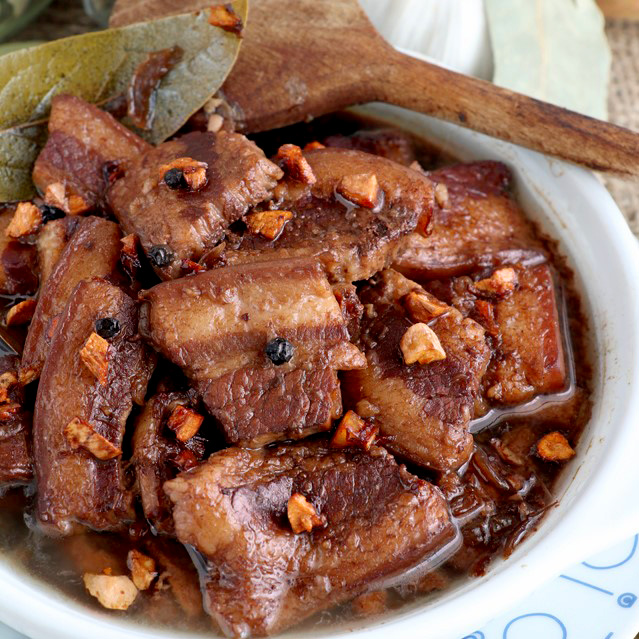
Pork Adobo Recipe (Adobong Baboy)
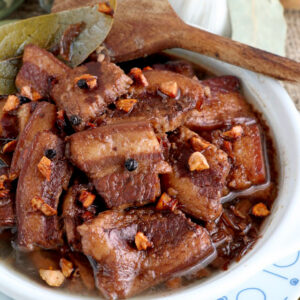
Pork Adobo (Adobong Baboy) is widely regarded as the unofficial national dish of the Philippines. Featuring tender chunks of pork belly slow-simmered in soy sauce, cane vinegar, abundant crushed garlic, whole black peppercorns, and bay leaves, this iconic dish balances savory, tangy, garlic-rich, and subtle sweet notes that taste even better the next day.
What is Pork Adobo?
Adobo refers to both a Filipino cooking method and the resulting stew, historically developed as a natural preservation technique using vinegar and salt. Adobong Baboy pairs succulently marbled pork with a classic braising liquid of soy sauce, vinegar, and garlic. As the pork simmers, the vinegar tenderizes the meat fibers while the pork fat renders, creating a rich, glossy sauce that coats every bite and is meant to be spooned generously over hot steamed rice.Ingredients
Equipment
Method
Step-by-Step Instructions:
- In a large bowl, combine the pork belly chunks, half of the crushed garlic, soy sauce, and whole black peppercorns. Cover and marinate in the refrigerator for at least 30 minutes (or overnight for maximum flavor penetration).

- Heat cooking oil in a large deep pan or Dutch oven over medium-high heat. Remove the pork chunks from the marinade (reserve the marinade liquid) and sear in the hot oil for 5 to 6 minutes until browned on all sides.

- Add the remaining crushed garlic and diced onion to the pan. Sauté for 2 to 3 minutes until fragrant and lightly golden.
- Pour in the reserved marinade, 1 cup of water, and add the dried bay leaves. Bring the mixture to a boil.

- Pour in the cane vinegar. Crucial step: Allow the liquid to boil uncovered for 3 to 5 minutes without stirring to allow the harsh raw vinegar bite to cook off properly.
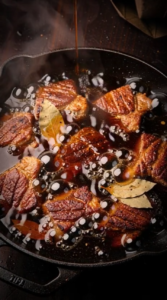
- Stir in the brown sugar (if using) to balance the acidity. Lower the heat to low, cover the pan, and simmer gently for 30 to 35 minutes until the pork becomes tender and juicy.

- (Optional) Add hard-boiled eggs during the last 10 minutes of simmering so they absorb the rich adobo sauce.

- Uncover the pan and simmer for an additional 5 to 10 minutes on medium heat to let the sauce reduce and thicken into a glossy, dark gravy (or continue until the fat renders completely for a crispy-style adobo). Serve hot over steamed white rice!
Notes
🌿 Health & Nutritional Benefits of Pork Adobo
Enjoying a hearty portion of Pork Adobo offers rich fuel, key micronutrients, and metabolic benefits:- High-Quality Protein for Muscle Maintenance: Pork supplies complete protein packed with essential amino acids vital for muscle growth, tissue repair, and athletic recovery.
- Rich in B-Vitamins & Essential Minerals: Naturally high in Vitamin B12, Vitamin B6, niacin, zinc, and iron, supporting energy metabolism, red blood cell synthesis, and brain health.
- Potent Antimicrobial & Cardiovascular Boost (Garlic): The heavy use of fresh garlic delivers allicin, a natural compound known for its anti-inflammatory, blood pressure-regulating, and immune-supporting properties.
- Digestive Support from Fermented Vinegar: Vinegar contains acetic acid, which aids digestive enzyme activity, helps regulate post-meal blood sugar levels, and improves overall nutrient absorption.
Key Ingredients & Cooking Tips
- Selecting the Right Cut: Pork belly (liempo) delivers the most tender, flavorful result due to its layers of meat and fat. For a leaner option, use pork shoulder (kasim) or combine both cuts.
- The Golden Rule for Vinegar: Always let the vinegar boil uncovered for 3 to 5 minutes before stirring. Stirring too early can cause the vinegar taste to taste raw and sharp rather than mellow and balanced.
- Marinating Time: While 30 minutes works for quick weeknight meals, marinating overnight lets the soy sauce and garlic penetrate deep into the pork fibers for richer flavor throughout.
- The “Next Day” Effect: Adobo is famous for tasting even better 24 hours after cooking as the acidity and garlic continue to mature and harmonize with the pork fat in the refrigerator.
📊 Complete Nutritional Profile
Here is the breakdown per serving of Pork Adobo:- Calories: 420 kcal
- Total Fat: 32 g
- Saturated Fat: 11 g
- Sodium: 850 mg
- Total Carbohydrates: 6 g
- Dietary Fiber: 1 g
- Sugars: 2 g
- Protein: 26 g
- Potassium: 410 mg
- Iron: 2.4 mg